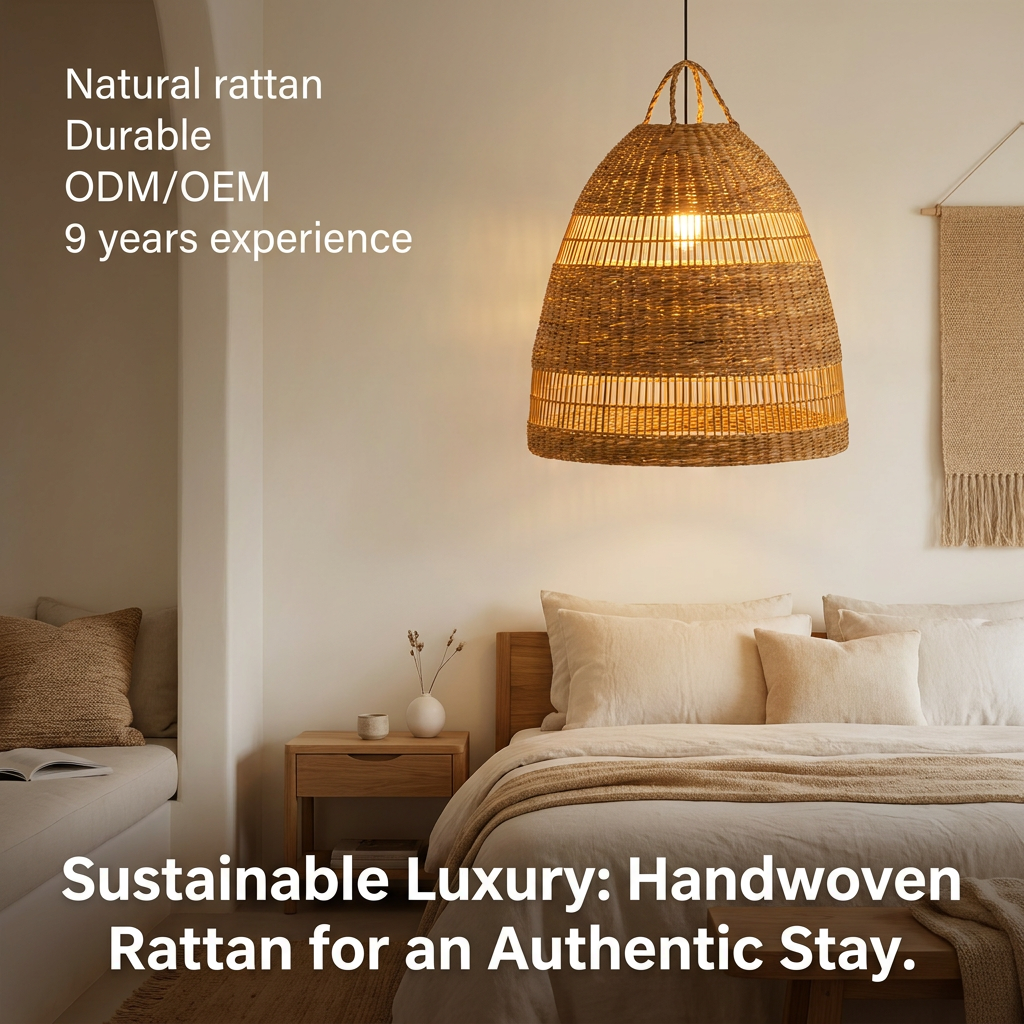
Create a Calming Sanctuary at Home with Natural Woven Lighting
A calming home is not created by decoration alone. It comes from a thoughtful balance of light, texture, color, sound, and daily function. Natural woven lighting can soften visual contrast, add handcrafted character, and make ordinary routines feel more restorative. This guide explains how to plan a peaceful interior, layer illumination, select responsible materials, and choose reliable decorative lighting partners for residential, hospitality, and design-led projects.
1. Begin with a Quiet Visual Foundation
Choose a restrained color palette
Start with warm whites, sandy neutrals, muted greens, soft clay tones, or gentle greys. These colors lower visual tension and create a stable background for natural materials. Instead of filling every wall with contrast, let one or two deeper tones appear through cushions, ceramics, or artwork. The goal is not to make the room plain; it is to give the eye fewer competing signals.
Reduce clutter without removing personality
A peaceful room still needs meaningful objects. Keep frequently used items accessible, then group decorative pieces into small, intentional arrangements. Closed storage can hide visual noise, while open shelves should hold only items that add warmth, memory, or function. This approach makes the room easier to maintain and helps light move more evenly across surfaces.
Create comfortable movement
Furniture should support calm movement through the room. Leave clear routes between doors, seating, and storage. Avoid oversized pieces that force people to squeeze around corners. A well-planned layout makes the home feel more spacious and reduces the sense of friction that often comes from poorly positioned furniture.
2. Bring in Natural Texture and Handcrafted Character
Use woven materials as soft focal points
Rattan, wicker, bamboo, linen, jute, and light-toned wood add texture without creating visual heaviness. A statement pendant made from natural fibers can become the emotional center of a dining area, bedroom, reading corner, or covered terrace. When evaluating a Handwoven Pendant Lamp Supplier, look for consistent weaving, stable frames, clean electrical integration, and finishes that suit the surrounding furniture.
Balance artisan detail with practical performance
Handcrafted lighting should feel expressive, but it must also perform reliably. A reputable Decorative Ceiling Lighting Factory should be able to explain material preparation, frame construction, heat resistance, wiring standards, and packaging protection. Buyers working across borders may also need a dependable Wicker Pendant Light Exporter with experience in documentation, shipping, and destination-market requirements.
Prioritize responsible materials
Natural style feels most authentic when sourcing supports responsible production. A credible Sustainable Lighting Solutions Provider can help buyers review renewable materials, lower-impact finishes, efficient packaging, and long-lasting components. For a highly expressive centerpiece, an Artisan eco-friendly Handmade Boho restaurant woven natural rattan bamboo light can introduce warmth and identity while reinforcing a nature-inspired design story.
3. Layer the Light for Comfort Throughout the Day
Build ambient light first
Ambient light sets the general mood. Choose warm, diffused illumination for living rooms, bedrooms, and dining spaces. Woven shades are especially effective because they soften glare and cast delicate patterns onto nearby surfaces. The fixture should feel bright enough for safe movement, yet gentle enough to support evening relaxation.
Add task lighting where focus is needed
Reading chairs, kitchen counters, desks, bedside tables, and vanities need more direct light. Use focused lamps or concealed lighting to support these activities without increasing the brightness of the whole room. Good task lighting prevents eye strain and allows the ambient layer to remain calm.
Use accent light sparingly
Accent lighting can highlight artwork, plants, textured walls, or architectural details. Keep it subtle. One or two carefully placed accents are usually more restful than many competing beams. This layered natural lighting approach creates depth while preserving a relaxed atmosphere.
4. Match the Lighting Partner to the Project
For custom residential collections
Brands developing exclusive designs may prefer an OEM Decorative Lighting Manufacturer that can produce to supplied specifications, or an ODM Pendant Light Factory that can support concept development, sampling, engineering, and refinement. A Luxury Residential Lighting Manufacturer should also provide careful material selection, refined finishing, and quality control suitable for premium interiors.
For wholesale and commercial programs
A Wholesale Rattan Chandelier Supplier is useful for retailers, distributors, and multi-location projects that need consistent pricing and repeatable production. Larger developments may require a Commercial Pendant Lighting Manufacturer that can manage volume, installation requirements, packaging standards, and coordinated delivery schedules. Buyers should also confirm whether the supplier can provide Contract Grade Pendant Lighting for demanding commercial environments.
For hospitality and design-led projects
A Hospitality Decorative Lighting Supplier should understand guest comfort, maintenance access, fire-safety requirements, and project timelines. A Boutique Hotel Lighting Factory may be ideal for distinctive small-scale properties, while a Resort Lighting Solutions Provider can support villas, public areas, restaurants, and outdoor-adjacent spaces. Designers may also work with an Interior Design Lighting Supplier or specify Architectural Decorative Lighting to align decorative fixtures with the wider lighting plan.
5. Finish the Sanctuary with Daily Rituals
Control brightness and color temperature
Use dimmers where possible and select warm light sources for evening use. Lower brightness before bedtime to help the room transition from active to restful. In multifunctional spaces, separate lighting circuits allow one area to remain useful without flooding the entire room with light.
Support calm with sensory consistency
Soft textiles, natural fragrance, quiet ventilation, and reduced electronic clutter can reinforce the atmosphere created by the lighting. Repeat a small number of materials across the room so the design feels connected. For example, a woven pendant can relate to a cane cabinet door, a jute rug, or a bamboo tray.
Choose pieces that age well
A calming sanctuary should not depend on short-lived trends. Select lighting and furniture that can adapt to seasonal textiles, artwork, and changing routines. Durable handcrafted pieces often become more meaningful over time, especially when their materials and construction remain visible and honest.
Conclusion
Creating a calming sanctuary at home is a process of subtraction, balance, and thoughtful layering. Begin with a quiet visual foundation, introduce natural texture, control glare, and select lighting that supports both atmosphere and function. When the right materials, fixture scale, and sourcing partner come together, a room can feel peaceful without losing personality. The result is a home that welcomes rest, supports everyday life, and remains visually warm for years.
Address
No. 3, Lane 6, Fushan, Tiebian Village, Henglan, Zhongshan City



CONTACT US
_lutHu5.png)


Call Us
13527147288
E-mail Us