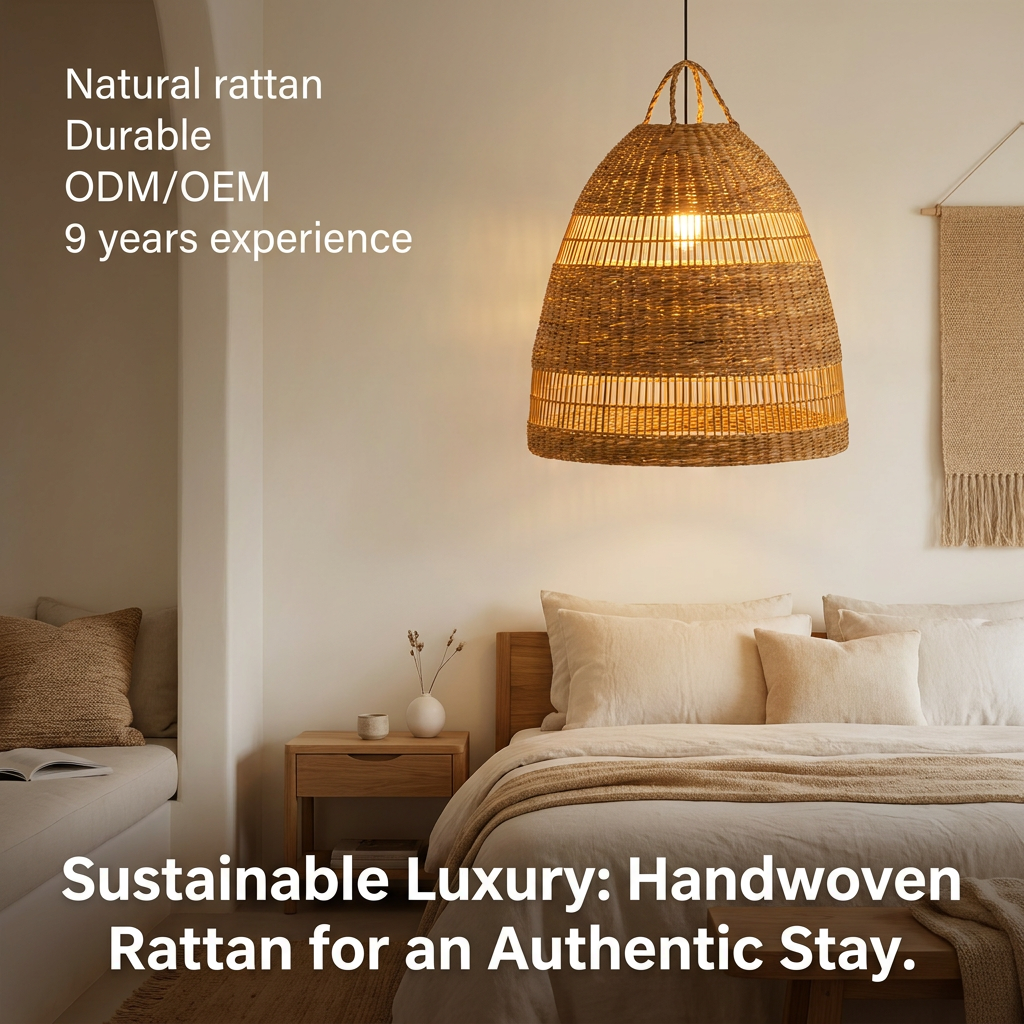
Sustainable Woven Lighting Materials and Craftsmanship
Natural woven lighting can make a room feel warm and grounded, but its long-term value depends on more than appearance. Material selection, frame construction, weaving consistency, finish quality, and responsible production all influence durability and visual character. Understanding these details helps homeowners, designers, and project buyers choose fixtures that support both a calming interior and practical everyday use.
1. Understand the Main Woven Materials
Rattan and wicker
Rattan is valued for its flexibility, strength, and natural variation. Wicker describes a weaving method rather than one specific material, so buyers should ask what fiber is actually used. A reliable Handwoven Pendant Lamp Supplier should provide clear material information, sample consistency, and realistic expectations about natural color variation.
Bamboo and mixed fibers
Bamboo can create lightweight structures with a clean linear texture, while mixed-fiber shades may combine natural strands with internal metal frames. A qualified Decorative Ceiling Lighting Factory should control moisture content, edge finishing, frame alignment, and electrical clearances. A Wicker Pendant Light Exporter should also protect delicate woven surfaces during transport.
2. Evaluate Responsible Production
Look beyond green claims
A credible Sustainable Lighting Solutions Provider should be able to discuss renewable material choices, low-impact coatings, efficient packaging, component replacement, and waste reduction. Sustainability is strongest when a product is designed to last, can be maintained, and avoids unnecessary material complexity.
Confirm traceability and consistency
Natural materials vary, but controlled sourcing and preparation can reduce avoidable defects. For established designs, an OEM Decorative Lighting Manufacturer should follow approved specifications and inspection standards. An ODM Pendant Light Factory can help refine the concept so the chosen material suits the intended shape, production method, and target price.
3. Inspect the Craftsmanship
Check the weave
Look for even tension, secure ends, consistent spacing, and clean transitions around the frame. Small handmade variations are part of the character, but loose strands, sharp edges, and distorted geometry may indicate weak quality control. A Wholesale Rattan Chandelier Supplier should be able to maintain an agreed visual tolerance across repeat orders.
Review the supporting structure
The internal frame carries the shade and keeps its form. A Commercial Pendant Lighting Manufacturer should verify weld quality, coating adhesion, suspension strength, lamp holder alignment, and safe clearances. For public-facing projects, a Hospitality Decorative Lighting Supplier should also consider cleaning, maintenance, and replacement access.
4. Specify Materials for Hospitality Projects
Boutique hotels
A Boutique Hotel Lighting Factory may combine artisan details with customized dimensions and finishes to create a memorable guest experience. Samples should be reviewed under the actual project color temperature because warm and cool light can change the perceived tone of natural fibers.
Resorts and high-use environments
A Resort Lighting Solutions Provider should distinguish between indoor, covered outdoor, humid, and high-traffic applications. Products described as Contract Grade Pendant Lighting should be assessed for structural strength, repeated cleaning, component availability, and project documentation rather than appearance alone.
5. Connect Material Choice to the Design Plan
Interior coordination
An Interior Design Lighting Supplier can help match woven tones with flooring, furniture, fabrics, and wall finishes. Architectural Decorative Lighting should also coordinate with ceiling structure, recessed lighting, controls, and circulation routes so decorative fixtures remain integrated with the overall scheme.
Premium residential quality
A Luxury Residential Lighting Manufacturer may offer tighter weave selection, refined hardware, custom stains, hand-finished details, and pre-shipment inspection. An Artisan eco-friendly Handmade Boho restaurant woven natural rattan bamboo light can also work beautifully in a private dining room or conservatory when material quality and scale are carefully controlled.
6. Use a Practical Sample Approval Process
Review physical samples
Photographs cannot fully show texture, flexibility, surface finish, or shadow pattern. Approve a physical sample or production-standard prototype whenever possible. Record the material, color range, dimensions, cable, canopy, lamp holder, and packaging method so the final order can be checked against the same reference.
Apply the ideas at home
Once material and craftsmanship standards are clear, the final step is combining them with a soothing room plan. Explore our guide to hospitality-inspired sanctuary design at home.
Conclusion
Sustainable woven lighting should unite responsible material choices, durable construction, careful craftsmanship, and realistic maintenance. Ask clear questions about fiber type, frame quality, finish, electrical integration, packaging, and production control. A well-made fixture can soften light, bring natural texture into the room, and remain useful for many years, making durability an essential part of both sustainability and design value.
Address
No. 3, Lane 6, Fushan, Tiebian Village, Henglan, Zhongshan City


CONTACT US
_lutHu5.png)


Call Us
13527147288
E-mail Us