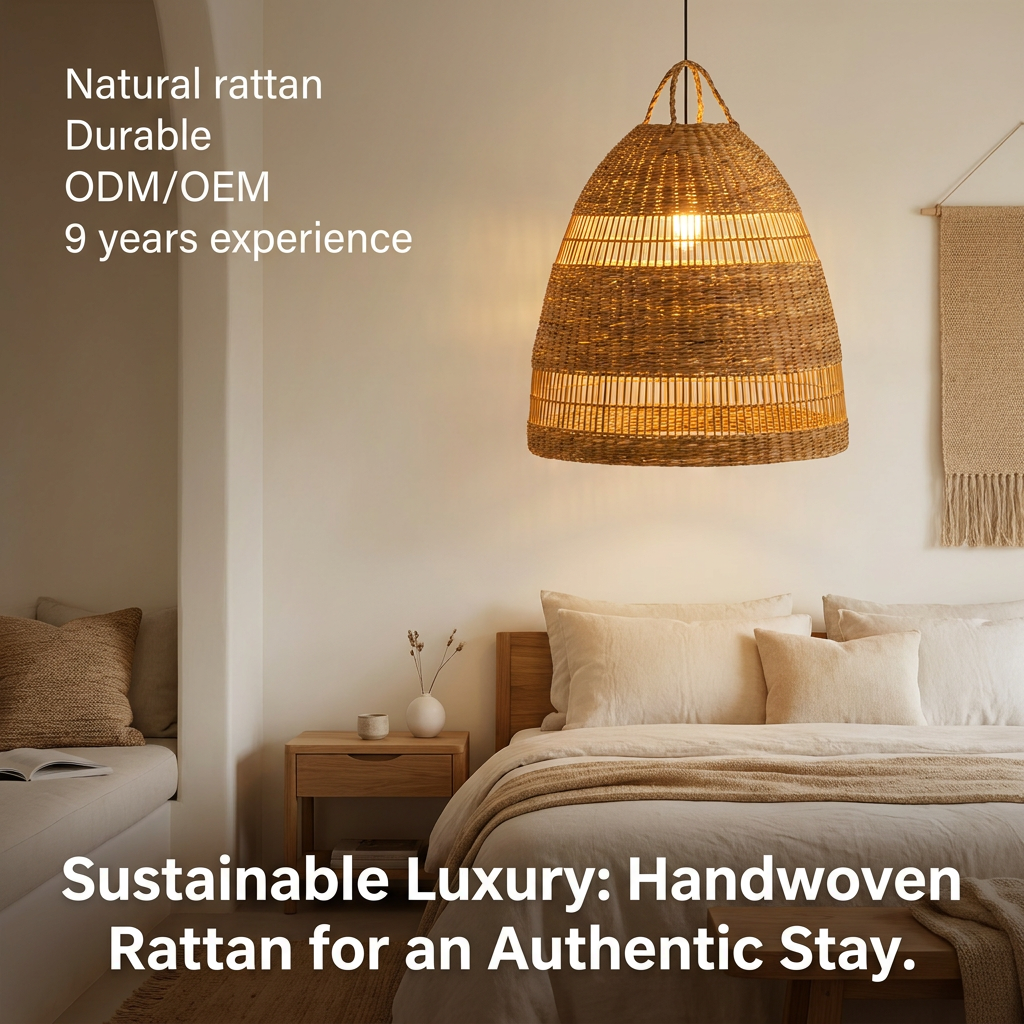
Building a Timeless Collection with Rattan Woven Lamps
A timeless rattan lighting collection is built through disciplined choices rather than an endless number of products. The strongest ranges share a recognizable design language, coordinated proportions, consistent materials, practical installation details, and enough variation to suit different rooms. Whether the collection is intended for retail, residential projects, restaurants, hotels, or resorts, each fixture should feel related without looking repetitive.
1. Define a Clear Design Language
Begin with craftsmanship standards
A dependable Premium Handmade Lighting Factory should document weave density, acceptable natural variation, frame tolerance, edge finishing, hardware quality, and electrical assembly. A professional Natural Fiber Lighting Supplier can then help establish a controlled palette of rattan, bamboo, cane, wicker, or mixed fibers that supports the collection’s identity.
Make responsibility part of the product brief
Strong Eco-Friendly Lighting Solutions consider material efficiency, packaging volume, durable components, repairability, and realistic product life. An experienced Artisan Crafted Lighting Manufacturer can translate these goals into production methods that retain visible handwork while meeting repeat-order expectations.
2. Build a Family of Coordinated Forms
Create a scalable hero design
Start with one recognizable silhouette, then adapt its diameter, depth, and weave pattern. A Custom Woven Pendant Fixture can serve as the hero model, while a smaller Handmade Wicker Ceiling Lamp can extend the same character into bedrooms, corridors, breakfast areas, or compact dining spaces.
Control construction across every size
A capable Decorative Rattan Lamp Shade Factory should adjust frame reinforcement, lamp holder position, cable length, and packaging as dimensions change. Simply enlarging a small shade often produces poor proportions, excessive weight, or uneven weaving.
3. Cover Distinct Interior Styles Without Losing Identity
Develop relaxed and expressive options
Coastal Style Pendant Lighting can use pale fibers and open patterns, while a Bohemian Ceiling Light Fixture may introduce fringe, layered forms, or stronger handcrafted texture. Both can belong to the same range when hardware, proportions, and material tones remain coordinated.
Add calm modern interpretations
An Organic Modern Hanging Lamp should combine soft natural texture with a simple form. A Scandinavian Woven Pendant Light may use restrained geometry and light finishes, while Japandi Style Rattan Lighting can emphasize warm minimalism, careful spacing, and quiet detail.
Include a sharper contemporary direction
A Contemporary Natural Lighting Fixture may use dark-stained fibers, matte metal, precise outlines, or architectural suspension. This gives the collection relevance in urban apartments, offices, boutiques, and design-focused hospitality interiors.
4. Add Premium Scale and Visual Impact
Create a clear top tier
A Luxury Wicker Chandelier Supplier should support refined finishing, selected materials, custom hardware, and stronger inspection. An Oversized Rattan Ceiling Fixture can become the collection’s statement piece for double-height rooms, lobbies, restaurants, and large dining areas.
Organize the full range logically
A successful Designer Pendant Lighting Collection may include compact, medium, large, and statement sizes, plus related wall, floor, or table lamps. Clear naming, dimensions, finish codes, installation drawings, and lifestyle photography make the range easier to specify and sell.
5. Prepare the Collection for Hospitality and Projects
Design for repeated use
Premium Hospitality Lighting Solutions require consistent color, repeatable mounting, practical cleaning, replacement parts, dimming compatibility, and durable suspension. An Interior Decor Lighting Manufacturer should be able to coordinate the collection with ceiling plans, furniture layouts, controls, and architectural lighting.
Build dependable supply support
A Handcrafted Decorative Lamp Supplier should provide samples, finish references, packaging standards, inspection reports, and production timelines. These systems help retailers and project buyers reorder with confidence and reduce variation between batches.
6. Position the Range for Long-Term Value
Combine refinement with material honesty
Eco Luxury Home Lighting should feel polished without hiding the natural character of the fibers. A Sustainable Decorative Chandelier gains credibility through durable construction, replaceable components, sensible packaging, and a design that can remain relevant beyond a single season.
Use accurate product storytelling
A description such as Artisan eco-friendly Handmade Boho restaurant woven natural rattan bamboo light should be supported by clear material details, dimensions, craftsmanship images, installation information, and realistic application photography. Accurate communication helps buyers understand what makes the product valuable.
7. Launch, Review, and Improve
Test the collection in real interiors
Photograph the fixtures above different table shapes, in varied ceiling heights, and under multiple color temperatures. Collect feedback about scale, glare, installation, packaging, and maintenance. A timeless range evolves through careful refinement rather than frequent redesign.
Maintain consistency over time
Keep approved samples, material swatches, hardware references, drawings, and inspection criteria. When fibers or components change, review the visual and technical impact before accepting the substitution. Consistent documentation protects the identity of the collection and supports future expansion.
Conclusion
A timeless rattan woven lamp collection combines distinctive craftsmanship with a clear commercial structure. Coordinated forms, scalable sizes, controlled materials, reliable hardware, and project-ready documentation allow the range to serve different interiors without losing its identity. By balancing natural character, responsible production, visual impact, and repeatable quality, brands and buyers can create lighting that continues to be admired, specified, and reordered for years.
Address
No. 3, Lane 6, Fushan, Tiebian Village, Henglan, Zhongshan City


CONTACT US
_lutHu5.png)


Call Us
13527147288
E-mail Us