From Handwoven Craft to Large-Scale Projects: How to Source Custom Woven Lighting Successfully
Custom woven lighting combines natural craftsmanship with the technical requirements of modern residential, hospitality, and commercial projects. Rattan, bamboo, wicker, and other natural fibers create decorative lamps with distinctive texture, warm illumination, and handmade character, but successful bulk production requires careful control of materials, frame construction, weaving dimensions, electrical components, suspension systems, packaging, and quality standards.
1. Understand Why Woven Lighting Production Is Different
Natural materials are less uniform. Individual pieces of rattan or bamboo can vary in diameter, surface texture, flexibility, natural color, moisture level, straightness, and fiber structure.
A buyer working with a Rattan Lighting Manufacturer China should evaluate both craftsmanship and manufacturing control. The objective is to keep finished lamps within acceptable dimensions and quality standards while preserving authentic variation.
2. Select Materials Before Developing the Lamp
A Rattan Pendant Light can be created with tight weaving, open weaving, curved structures, basket forms, domes, cylinders, or large sculptural frames.
A Bamboo Woven Lamp can provide a cleaner and more architectural appearance, while a Wicker Ceiling Light offers strong handcrafted detail for farmhouse, coastal, rustic, bohemian, and hospitality interiors.
A capable Wicker Lighting Supplier should explain which construction method is appropriate for the required shape. An experienced Natural Fiber Lighting Exporter can help buyers select materials according to design, target market, packing requirements, and intended application.
3. Start With a Clear Product Specification
A basic specification can include product diameter, height, overall hanging height, material, weaving pattern, frame material, frame finish, cable length, cable color, ceiling canopy, lamp holder, bulb requirement, quantity, and packaging requirements.
A clear specification makes Custom Rattan Lighting development more efficient and reduces unnecessary revisions.
4. Decide Between OEM and ODM Development
OEM Woven Lighting is suitable when the buyer already has an established design or wants to modify an existing factory model. A Decorative Lighting OEM Factory may customize dimensions, colors, weaving details, metal finishes, cables, canopies, labels, cartons, and instruction sheets.
A Pendant Light ODM Manufacturer can develop products from mood boards, interior concepts, market references, hand sketches, material samples, and desired price positioning. ODM Pendant Light Design helps brands create collections that look different from standard catalog products.
5. Use Samples to Solve Problems Before Production
A prototype allows buyers to evaluate shape, proportion, weaving density, fiber thickness, color, light transmission, shadow effect, cable length, ceiling canopy, and overall craftsmanship.
This is particularly important for Bespoke Lampshade Production, because the appearance of a handmade shade can change significantly when the light is switched on.
6. Evaluate the Frame Behind the Weaving
The frame determines whether the lamp maintains its shape, hangs correctly, remains stable, supports the woven material, and survives transport.
A Contract Lighting Manufacturer producing oversized pieces for restaurants or hotels should consider both visual appearance and structural requirements from the beginning.
7. Control Handmade Quality Without Removing Its Character
A professional Handmade Lighting Wholesale Supplier should establish tolerances for diameter, height, frame shape, opening size, hanging position, and electrical component placement.
This makes it possible to produce Handcrafted Pendant Lighting in commercial quantities while preserving its authentic appearance.
8. Plan for Commercial Quantities
A Commercial Lighting Factory should manage material purchasing, frame production, weaving schedules, electrical assembly, inspection, packaging, and production timing.
For Bulk Pendant Light Supply, buyers should confirm production capacity before placing large project orders.
9. Build Collections Instead of Individual Products
A Home Decor Lighting Supplier can help coordinate materials and design details across small, medium, and large pendants as well as table, floor, and wall lamps.
For Private Label Lighting, consistency across the collection helps strengthen brand identity.
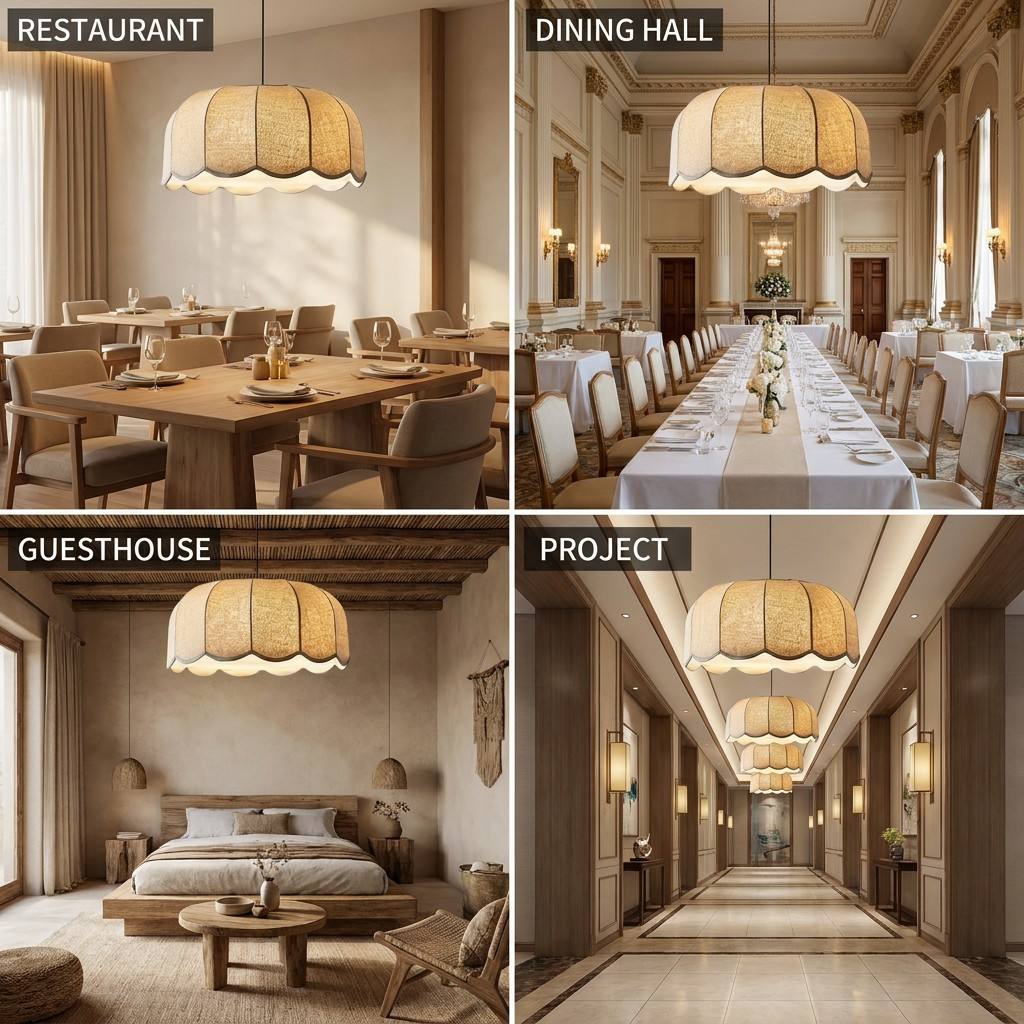
10. Customize Lighting for Restaurants
Restaurant Pendant Lighting may be customized according to table dimensions, seating layout, ceiling height, interior materials, brand concept, and desired light distribution.
For a bohemian or nature-inspired dining environment, an Artisan eco-friendly Handmade Boho restaurant woven natural rattan bamboo light can become a significant part of the restaurant's visual identity. A Boho Pendant Light can work particularly well with timber, stone, plants, ceramics, linen, and textured wall finishes.
11. Develop Lighting for Hotels
Hotel Lighting Solutions may include products for guest rooms, suites, lobbies, restaurants, bars, corridors, reception zones, lounges, and spas.
A specialized Hospitality Lighting Exporter should be able to coordinate different quantities and specifications within the same project. A Boutique Hotel Lighting Supplier may offer greater flexibility when a designer wants exclusive shapes or smaller customized production quantities.
12. Adapt Natural Lighting for Resorts
Resort Lighting Solutions can use natural materials to reinforce tropical, coastal, wellness, or eco-inspired design themes.
A Resort Lighting Factory may develop oversized decorative pieces for villa bedrooms, resort restaurants, reception areas, spa spaces, lounges, and covered terraces. Coastal Woven Lighting can be especially effective in properties using pale timber, stone, natural textiles, and relaxed neutral colors.
13. Coordinate With Interior Designers and Architects
Interior Design Studios may focus on shape, material, proportion, and visual atmosphere, while teams handling Architect Lighting Specification may pay closer attention to dimensions, installation, suspension, electrical details, and technical coordination.
An experienced Interior Lighting Manufacturer should communicate effectively with both creative and technical teams.
14. Make Commercial Decorative Lighting Project-Friendly
Commercial Decorative Lighting needs to work within a construction schedule. Buyers should confirm production lead time, sample approval schedule, packaging dimensions, installation accessories, spare components, and replacement procedures.
Professional Contract Lighting Services can help organize these details across large projects.
15. Improve Packaging for Natural Fiber Lamps
Packaging should protect shade edges, frame shape, decorative weaving, electrical components, and surface finishes.
For Wholesale Rattan Lamps, carton design should also consider shipping volume. Furniture and Lighting Importers should consider both product cost and transportation efficiency when evaluating new designs.
16. Prepare Products for Distribution
Lighting Distributors may prefer simple identification systems that make warehouse management easier. Home Decor Retailers may require retail-ready cartons and branded packaging. Hospitality Purchasing Managers may need fixtures labeled according to room type, building, floor, or installation zone.
17. Build an Effective Lighting Sourcing Process
Professional Lighting Project Sourcing should include concept definition, material selection, dimension confirmation, sampling, illumination review, electrical approval, packaging confirmation, production, quality checks, and shipment.
For larger developments, Hospitality Lighting Procurement may involve designers, purchasing teams, project managers, contractors, factories, and logistics companies.
18. Understand Different Customer Requirements
Restaurant Designers often focus on atmosphere, fixture placement, and how light interacts with dining tables. Boutique Hotel Owners may value distinctive fixtures that make their properties recognizable. Resort Procurement Teams often focus on quantities, schedules, replacement units, and specification consistency. Property Developers may prioritize commercial pricing, installation efficiency, and reliable delivery.
Cafe Owners often want decorative lighting that creates a recognizable environment. Vacation Rental Hosts, Eco-Conscious Homeowners, and Boho Decor Buyers are often drawn to natural materials, handcrafted aesthetics, and expressive forms.
19. Choose the Appropriate Decorative Style
A Farmhouse Woven Lamp may use a traditional basket silhouette. Organic Modern Lighting can combine simple geometric forms with natural fibers. A Natural Fiber Lampshade can create a softer decorative layer around the bulb.
20. Scale Handmade Lighting Without Losing Its Soul
The biggest challenge in woven lighting manufacturing is balancing craftsmanship and repeatability. Customers choose natural woven fixtures because they do not want interiors to feel overly industrial. At the same time, professional projects need reliable dimensions, stable construction, appropriate electrical components, effective packaging, and predictable production schedules.
A well-managed Lighting Customization Service can preserve the warmth of handwoven materials while adapting the product for retail, hospitality, and commercial applications. Whether the project involves a single Woven Pendant Lamp, a coordinated hotel collection, or hundreds of decorative fixtures for an international restaurant group, successful sourcing begins with clear specifications, careful sampling, effective quality control, and communication between buyer and manufacturer.
READ MORE
How to Style, Install, and Maintain Woven Lighting for Long-Lasting Interior Appeal
Address
No. 3, Lane 6, Fushan, Tiebian Village, Henglan, Zhongshan City


CONTACT US
_lutHu5.png)


Call Us
13527147288
E-mail Us